24-Hour Emergency Helpline 01844 292292


Home / News / General News / Rocky the rescued shag
Rocky the rescued shag
A seabird far from the sea!
We recently welcomed a very unusual patient. Rocky is a juvenile shag (Gulosus aristotelis), a seabird normally found along our coasts. Finding one in Hertfordshire – a landlocked county nestled in the Chiltern Hills and more than 40 miles from the nearest coast – is quite an unusual occurrence.
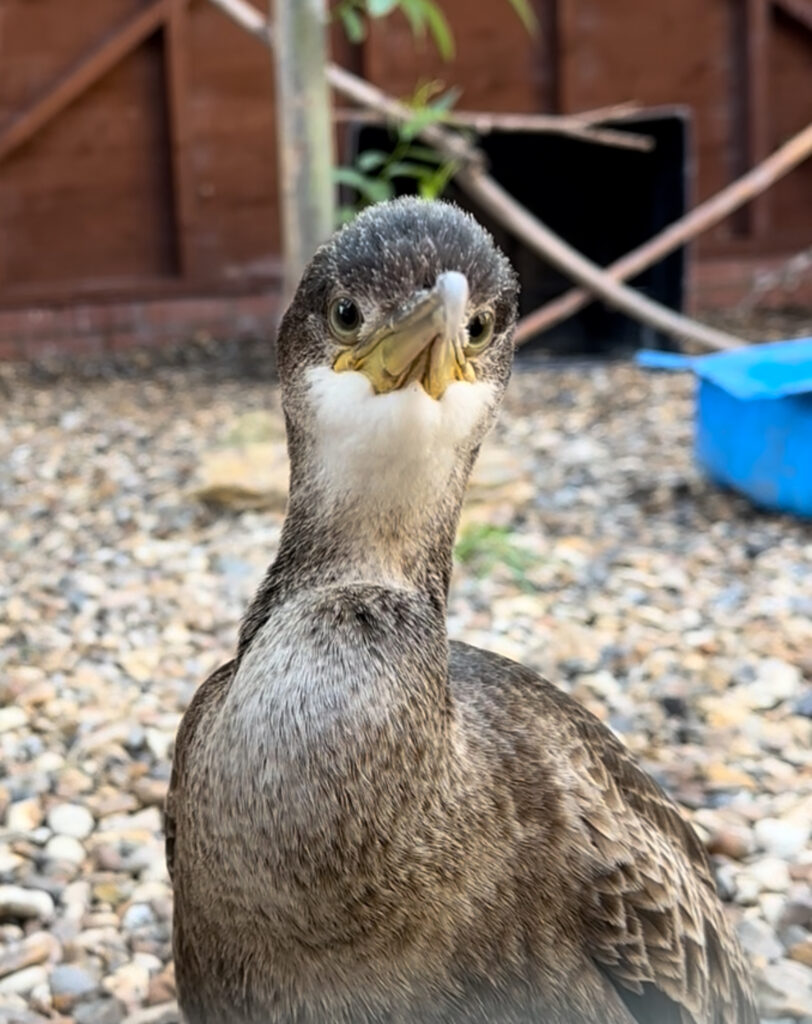
Rocky was discovered in a Hertfordshire garden after colliding with a window. Disorientated and hungry, the young bird was brought to Tiggywinkles where he was treated for a head trauma injury. After 14 days of supportive care and recovery, he was safely released at a local reservoir close to where he was rescued.
Shags are expert fish divers and strong fliers, but unlike their close relatives, cormorants, they very rarely stray inland.
About the Shag (Gulosus aristotelis):
Habitat: Shags are strictly coastal birds, found around rocky shores, sea cliffs, and islands.
Range in UK: Most common around Scotland, northern England, Wales, and south-west England. Rare inland.
Appearance: Slightly smaller and slimmer than cormorants, with a dark green sheen to their plumage and a distinctive crest during breeding season.
Diet: Fish-eating seabirds, also eating crustaceans and molluscs, they’re skilled divers that can reach depths of up to 45 metres.
Status: Classified in the UK as Amber following a 2024 update to the Birds of Conservation Concern 5: the Red List for Birds (2021) due to restricted breeding range and population sensitivity to environmental change.
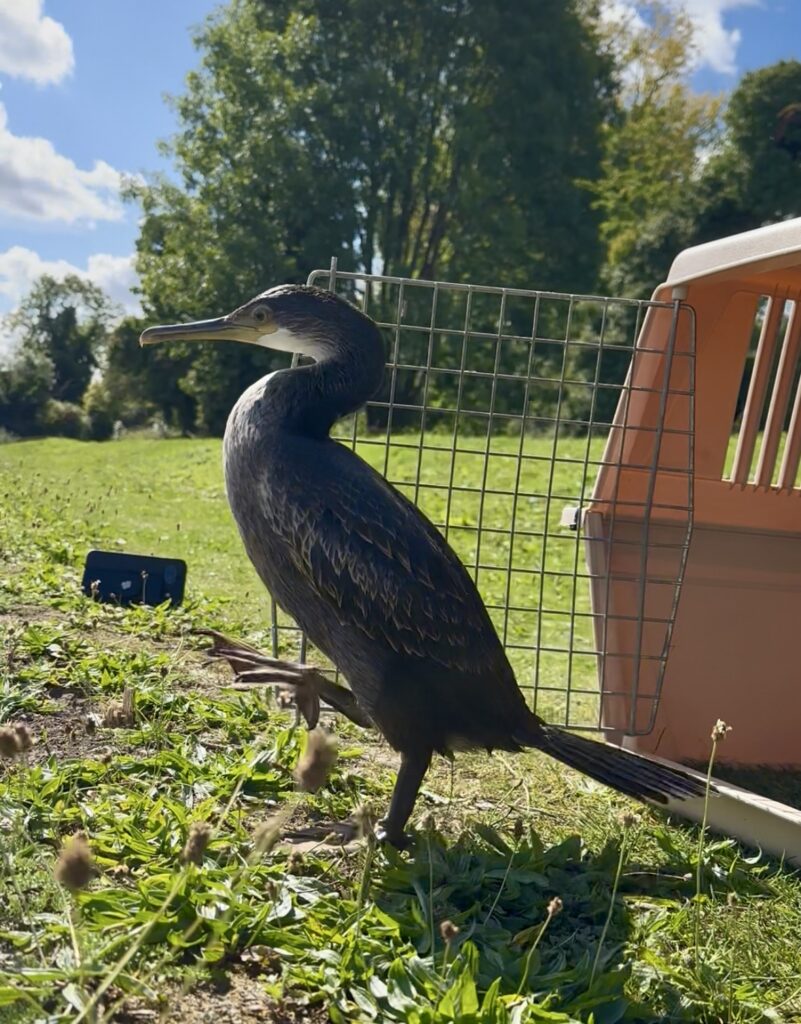
“While we do occasionally see shags at Tiggywinkles, it’s still a rare admission,” said Sharon Jacobs, Head Wildlife Vet Nurse at Tiggywinkles. “They are birds of the coast, so to find one here in the heart of the countryside is always remarkable. Thankfully, this juvenile responded well to treatment and was safely returned to the wild.”
At Tiggywinkles, one of the world’s busiest wildlife hospitals, we treat more than 13,000 wild animals each year, from garden birds to rare and unusual species. Each one is rescued by an act of compassion and kindness.
If you find a wild bird in trouble, please don’t hesitate to contact a wildlife rescue. You can find your nearest at helpwildlife.co.uk
Make a donation
By donating to Tiggywinkles, you will be helping us provide life-saving treatment and care to all species of British Wildlife.