24-Hour Emergency Helpline 01844 292292

Home / News / General News / Peace, love and pigeons
Peace, love and pigeons
Among the hundreds of wild patients we care for at Tiggywinkles each year, feral pigeons are some of the most frequently overlooked — and unfairly misunderstood.
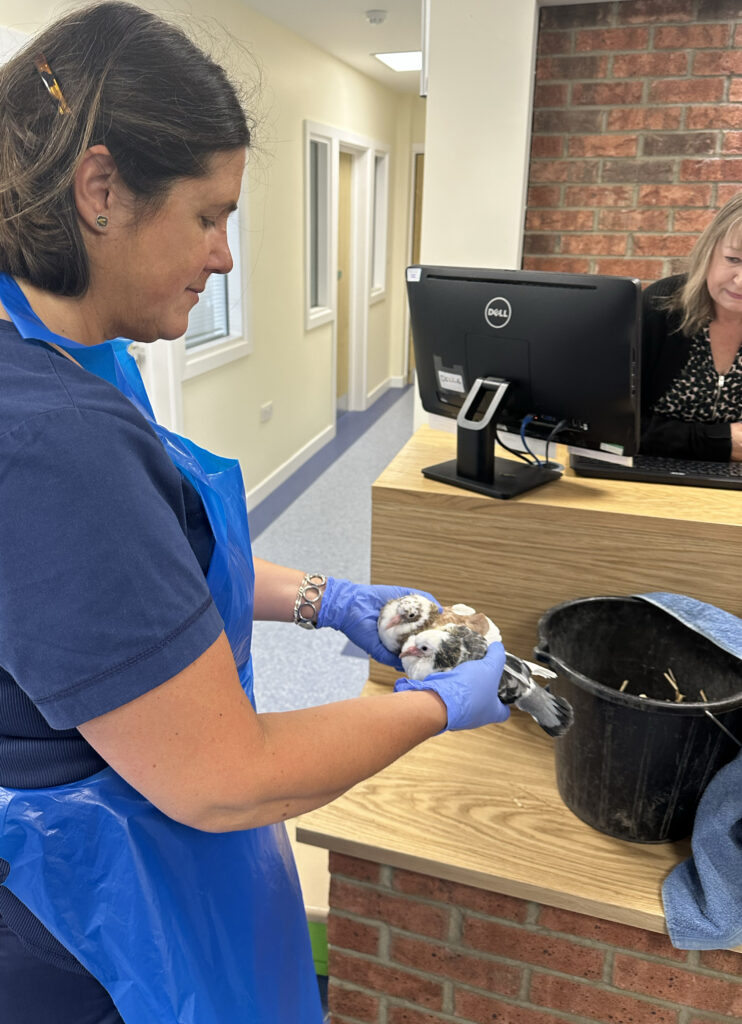
Take one look at this gentle pair of youngsters, quietly nestled together in our hospital, and you might see them in a different light.
Often brought in as fluffy, rather scruffy-looking chicks, baby pigeons (or “squabs”) are rarely seen in the wild. That’s because pigeon parents are incredibly devoted, hiding their nests away in sheltered places and feeding their chicks with nutritious “pigeon milk” until they’re ready to fledge. As they grow, these babies transform into sleek birds with stunning plumage – shades of soft grey, shimmering greens, and purples that catch the sunlight beautifully.
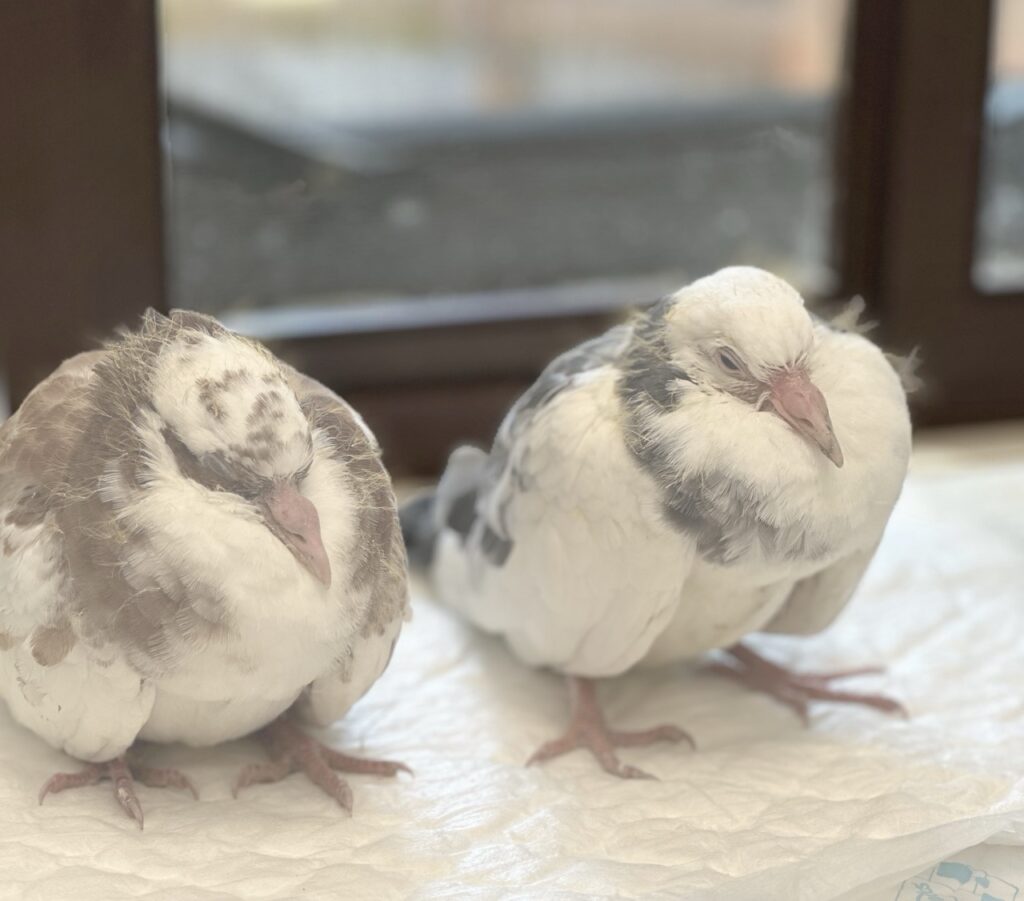
Commonly seen nesting in building ledges and feeding in parks and high streets, what many people don’t realise is that feral pigeons (Columba livia domestica) are descended from wild rock doves, originally nesting on sea cliffs. Humans domesticated them thousands of years ago, using them for food, sport, and perhaps most impressively – as messengers.
During both World Wars, pigeons played a vital role in carrying messages across enemy lines – many were even awarded medals for bravery!
At Tiggywinkles, we believe all wildlife deserves compassion and care, and pigeons are no exception. Injured birds are given the time and treatment they need to recover before being released back into the skies.
So next time you spot a pigeon quietly perching nearby, take a moment to appreciate its place in our shared landscape – a symbol of peace, resilience, and survival.
Find out more about ways you can help us to help wildlife
Make a donation
By donating to Tiggywinkles, you will be helping us provide life-saving treatment and care to all species of British Wildlife.